
The StAMPS guide

Module 11 of 11

Type 7: procedures

A six-step structure for describing a procedure, from indication and consent to confirming success and aftercare.
Kat, who sat StAMPS in 2025 2 min readUpdated 18 October 2026 Email this module
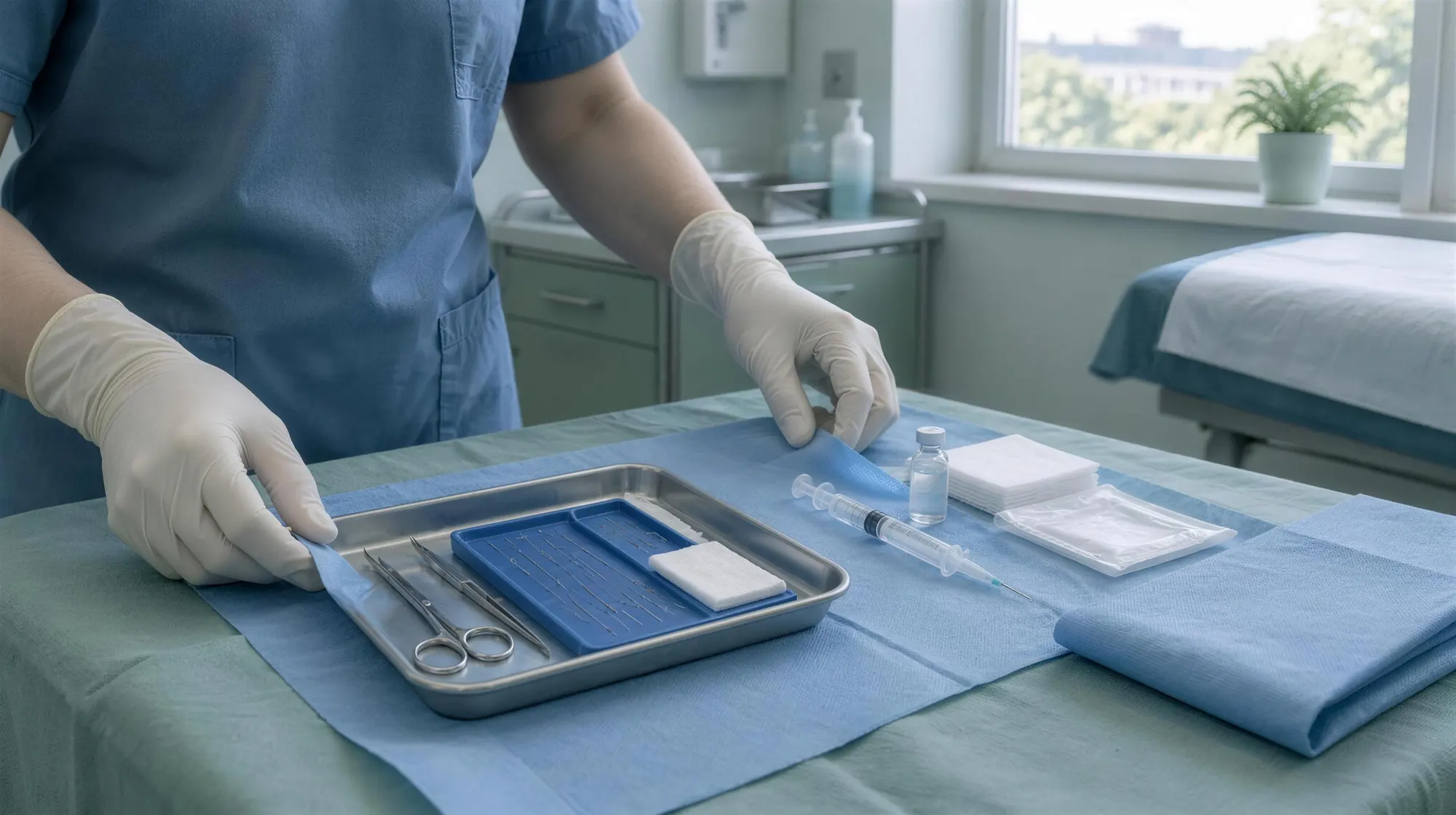
Gloved hands lay out a sterile procedure tray with a suture kit in a hospital treatment room.

Procedural questions ask you to explain how you would prepare for, perform and assess the outcome of a procedure. Your answer should cover the whole process, including consent and aftercare.

Use the following structure:

  • Confirm the indication and assess suitability – Explain why the procedure is needed and consider relevant contraindications, patient factors and the resources available.
  • Explain the procedure and obtain consent – Discuss what it involves, the expected benefits, important risks and alternative options. Give the patient an opportunity to ask questions and check their understanding.
  • Prepare the patient, equipment and team – Describe the setting, assistance, monitoring, infection-control measures and any analgesia or anaesthesia required.
  • Talk through the procedure – Describe the steps in a clear, logical sequence, highlighting key safety checks and how you would respond to complications.
  • Confirm success – Explain how you would assess the result, including any examination, monitoring or investigations needed.
  • Arrange aftercare – Include documentation, patient advice, safety netting and follow-up.

Use your procedural logbook to guide your practice. Work through the relevant procedures and rehearse describing each one aloud, from preparation and consent through to aftercare.

A study guide about exam technique, not clinical advice. Always follow current guidelines and local protocols. Independent practice platform. Not affiliated with, or endorsed by, any college or examining body. Exam names are used only to describe what you can practise for.

All modules in The StAMPS guide

  1. Start here: StAMPS, the format and how to prepareWhat StAMPS tests, how scenarios and scoring work, why you should know your town, and how to plan four to five months of preparation. 8 min
  2. The question typesThe seven main types of StAMPS question, and why recognising the type tells you which answer structure to use. 2 min
  3. Type 1a: GP and low-acuity ED assessmentA reliable seven-part structure for 'How would you assess this patient?', from your opening to investigations in a rural setting. 6 min
  4. Type 2: ED emergencies and the sandwich techniqueRecognise the emergency, summarise your priorities with the sandwich technique, then work through A–E, AMPLE and retrieval. 5 min
  5. How to use your preparation timeChoose your approach from the stem, then set out your page so your notes carry you through all three questions. 3 min
  6. Type 1b: management questionsA memory aid for a rounded, patient-centred management plan: from confirming the diagnosis to safety-netting and follow-up. 4 min
  7. Type 3: traumaCatastrophic haemorrhage, the primary survey, AMPLE, the secondary survey and preparing for retrieval from a small site. 5 min
  8. Type 4: population health and infectious diseaseThe three Cs (Consult, Clinic, Community) for questions where one diagnosis affects a whole small town. 3 min
  9. Type 5: leadership and problem-solvingHow to answer questions about teams, services and systems.Coming soon
  10. Type 6: medicolegal questions and curve ballsProfessional, ethical and legal responsibilities, and how to handle the unexpected.Coming soon
  11. Type 7: proceduresA six-step structure for describing a procedure, from indication and consent to confirming success and aftercare. 2 min