
Module 3 of 11
Type 1a: GP and low-acuity ED assessment
A reliable seven-part structure for 'How would you assess this patient?', from your opening to investigations in a rural setting.
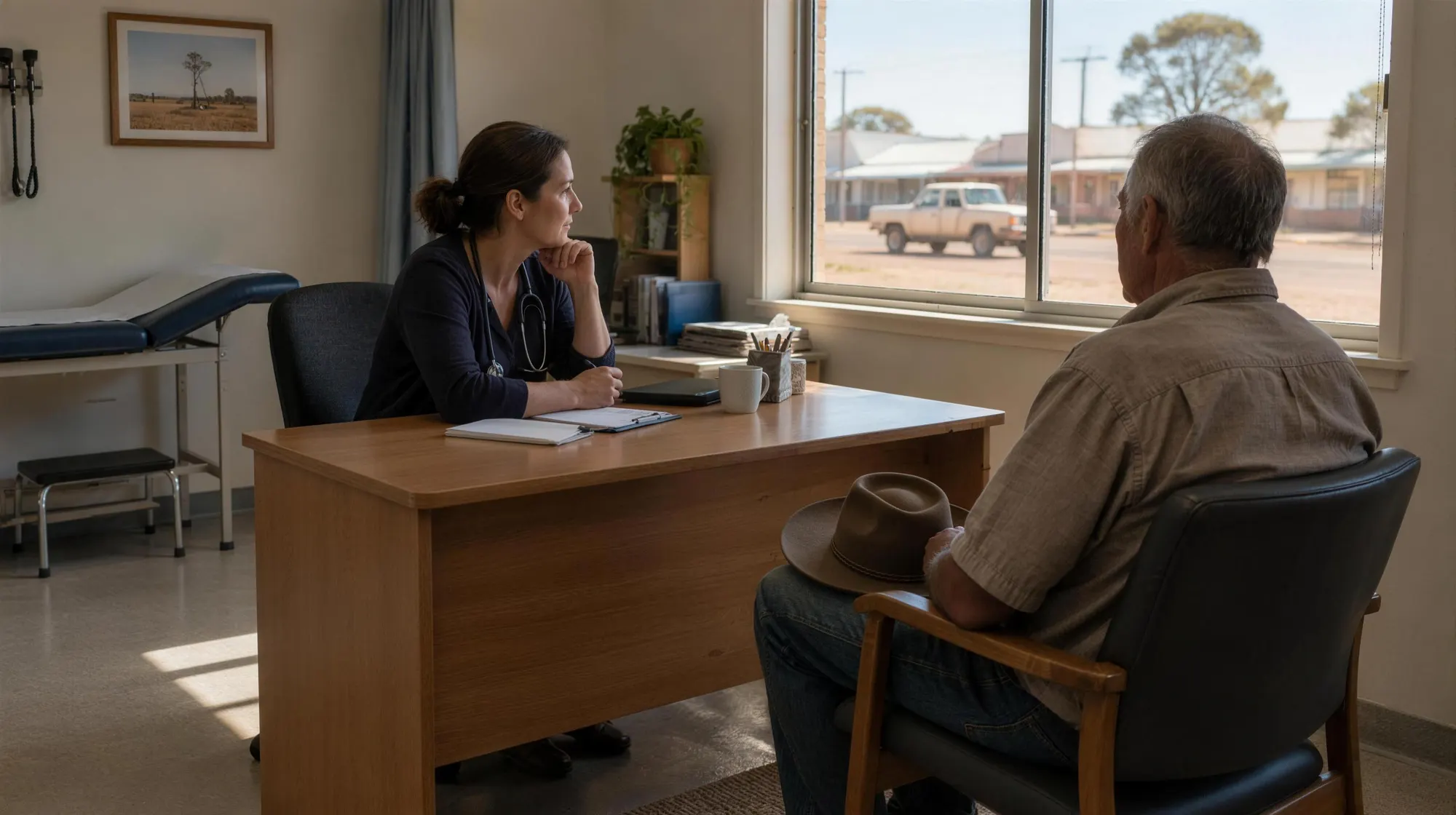
This is one of the most common question types you will encounter in StAMPS, so it is worth developing a clear, reliable structure.
Recognising the question
After the stem, you will often be asked: “How would you assess this patient?”
Before launching into your answer, consider two things:
- Is the patient acutely unwell, or could this presentation indicate something dangerous?
- Is the patient in an appropriate setting for assessment?
If the patient is stable, a targeted history and examination will usually form the basis of your approach. If they are acutely unwell, prioritise immediate assessment and stabilisation.
Pay attention to where the stem places you. A patient presenting to the GP clinic may need assessment in the ED. If so, say this explicitly and explain why.
If you are unsure, I would always say something like – I would assess the patient using an A-E approach. Assuming they were haemodynamically stable I would proceed to take a full history and physical examination – and then expand using the structure described below.
Your answer structure for GP/low acuity ED type assessment questions (1a)
Opening → Concerns and considerations → Differentials → Preparation → History → Examination → Investigations
1. Opening
Briefly interpret the presentation and establish your priorities. Show that you have considered the patient’s stability and whether the setting is appropriate.
For example:
“This patient presents with breathlessness. My first priority would be to establish whether they are acutely unwell and whether they can be assessed safely in the clinic or require transfer to the ED.”
Keep your opening short and specific to the case.
2. Concerns and considerations
Look beyond the presenting complaint. Identify any circumstances that could affect how you assess the patient or plan their care.
Depending on the case, consider:
- Age, consent and decision-making capacity, including Gillick competence where relevant.
- Whether a parent, guardian or support person should be involved.
- Confidentiality, safeguarding and the opportunity to speak privately.
- Whether symptoms could affect driving or other safety-sensitive activities.
- Advance care directives and the patient’s goals of care.
- Rural access barriers, available services and support at home
Choose the considerations that matter to this patient and explain their relevance. Avoid reciting the same list in every answer.
3. Differentials
Give a concise, prioritised differential diagnosis. Include likely causes, relevant alternatives and serious conditions you need to exclude.
A useful closing phrase is:
“The important diagnoses I would not want to miss are…”
Keep these diagnoses relevant to the presentation. Your differentials should guide the history, examination and investigations that follow.
4. Preparation before the history
Explain how you would create an appropriate environment for the consultation. This may include:
- Ensuring privacy and explaining confidentiality and its limits.
- Using a sensitive, empathetic approach to explore the patient’s perspective.
- Arranging an interpreter or involving an Aboriginal Liaison Officer where appropriate.
- Addressing immediate pain or distress.
- Offering a support person or chaperone where relevant.
- For an adolescent, taking part of the history with their parent or carer present and part privately, where appropriate.
5. History
Start with a targeted history of the presenting complaint, guided by your differentials. Explore the symptoms, their progression, associated features and relevant red flags.
Be selective. Spending too long on the presenting complaint can leave you without enough time to complete the assessment.
Then cover:
- Past medical history: highlight conditions that could change your assessment or management.
- Medications: include relevant prescribed, over-the-counter and other substances, drawing attention to medications that may affect this presentation.
- Allergies: ask about the reaction as well as the allergen.
- Social history: explore relevant living circumstances, supports, function, occupation and substance use.
- Immunisation history: include this when relevant.
Adapt your history to the patient. For an older person, for example, consider baseline function, falls, cognition, driving, support at home, next of kin and advance care planning.
6. Examination
Use a consistent opening, then tailor the examination to the presentation:
“I would begin with a general visual assessment to establish whether the patient appears well or unwell, followed by a full set of vital signs.”
Highlight any observations that are particularly important. In a patient with breathlessness, for example, emphasise respiratory rate, oxygen saturation and work of breathing. Include height, weight and BMI when relevant.
Next, describe the focused examination guided by your differentials. Name the key signs you are looking for, rather than simply listing examination systems.
For a respiratory presentation, you might say:
“I would perform a respiratory examination, assessing work of breathing, air entry and added sounds, and looking for signs such as cyanosis, clubbing or cachexia.”
Then add other relevant examinations, explaining their purpose where useful. Avoid adding a full examination of every system without a clinical reason.
7. Investigations
A simple transition is:
“In terms of investigations, I would divide these into tests available locally and those requiring external processing or referral.”
Structure this section around the setting and the resources described in the StAMPSville profile:
- Bedside or local investigations: select appropriate tests available in the clinic or ED. Think ECG, VBG, INR, Urine dipstick, BGL, Chem4/Chem8, troponin, bHCG.
- Laboratory investigations: identify any formal samples that need to be sent away and consider the turnaround time. Check your town profile for how often pathology is sent away.
- Imaging and other investigations: explain what is needed and whether it can be arranged locally or requires travel to the regional centre. Check your town profile for which imaging is available locally and which needs travel.
Make the practical implications explicit. If the patient needs a CT scan elsewhere, consider the urgency, their clinical stability and appropriate transport. If results will be delayed, explain how this affects the immediate plan and follow-up.
Choose investigations that answer a clinical question, and show how rural access affects your decisions.
That completes the assessment structure for GP and low-acuity ED questions. We will return to management questions later.
The real skill is getting all of that to fit into 3 minutes and that requires practice and ensuring everything is succinctly and clearly said.
A study guide about exam technique, not clinical advice. Always follow current guidelines and local protocols. Independent practice platform. Not affiliated with, or endorsed by, any college or examining body. Exam names are used only to describe what you can practise for.