
Module 8 of 11
Type 4: population health and infectious disease
The three Cs (Consult, Clinic, Community) for questions where one diagnosis affects a whole small town.
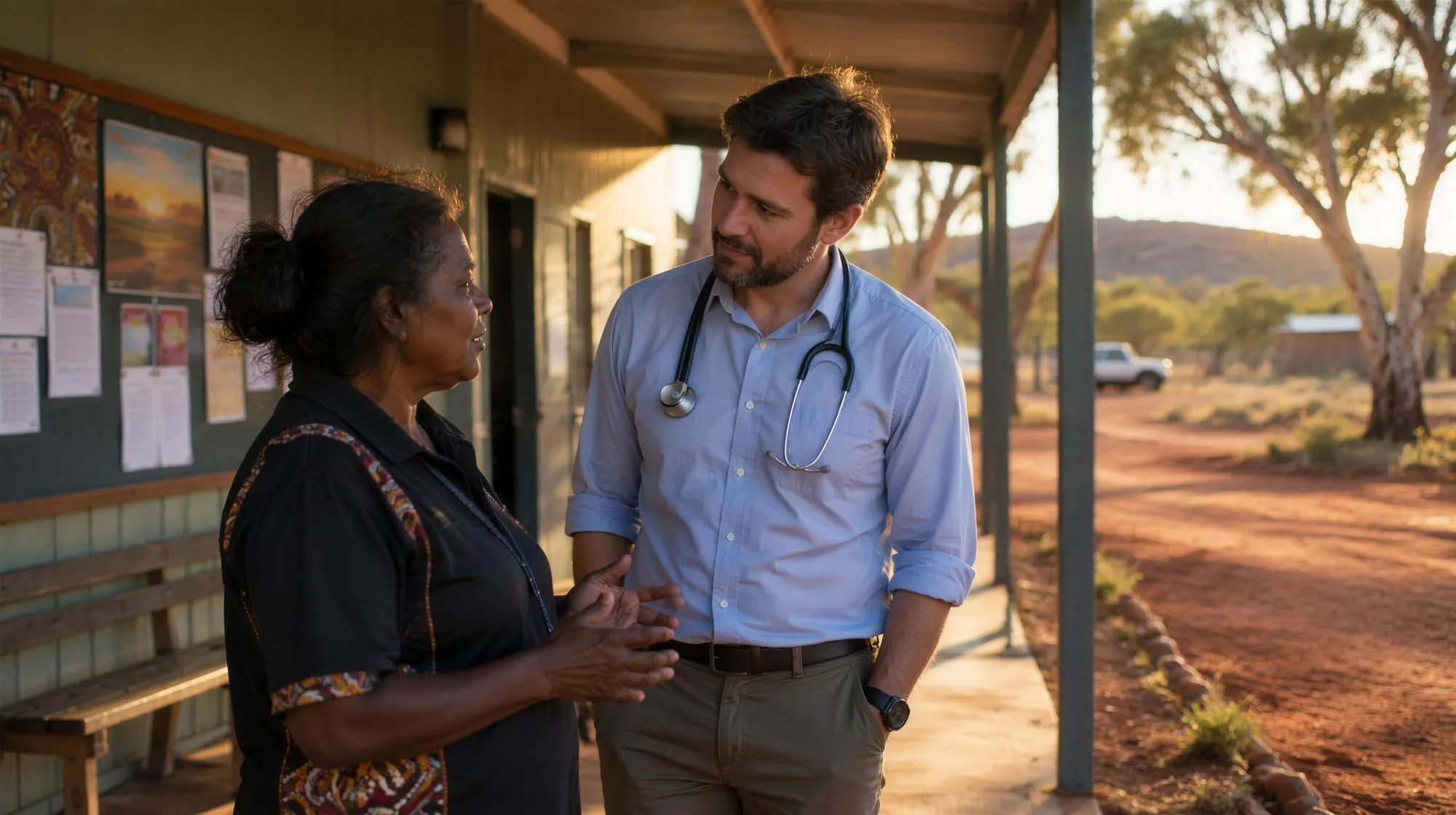
An infectious disease diagnosis may have implications beyond the individual patient, particularly in a small rural community. Your answer should address the patient’s care while considering close contacts, the clinic and the wider population.
I used the three Cs approach: Consult, Clinic and Community. This gave me a simple structure for thinking broadly without losing focus.
Opening: recognise the individual and community implications
For a patient diagnosed with tuberculosis, you might begin:
“This patient has been diagnosed with tuberculosis. I would consider the implications for their health and wellbeing, alongside the potential risk to close contacts and the wider community.”
Then work through the three Cs, adapting your response to the disease and the local setting.
1. Consult — care for the patient
- Take a brief, targeted history, perform a focused examination and arrange any further investigations needed.
- Assess severity and outline appropriate treatment.
- Consider PPE, isolation and other infection-control precautions.
- Determine whether the patient can be managed locally or requires transfer.
- Explore the psychological and practical impact of the diagnosis, including stigma, work, family responsibilities and access to care.
- Discuss contact tracing sensitively, explaining the process and how confidentiality will be maintained.
Use an empathetic approach, check the patient’s understanding and give them an opportunity to ask questions.
2. Clinic — organise the local response
- Identify public health notification requirements and involve the public health team.
- Coordinate assessment of close contacts, including testing and preventive treatment where indicated.
- Consider whether a dedicated testing clinic or additional local capacity is needed.
- Establish appropriate PPE and safe pathways for potentially infectious patients.
- Educate staff about recognition, transmission, infection control and escalation.
Testing, prophylaxis and outbreak measures are disease-specific. Explain what is relevant to the case and coordinate the response with public health advice.
3. Community — consider the wider response
- Consider targeted community testing or treatment where recommended.
- Review the role of immunisation, where relevant.
- Provide practical advice to reduce transmission.
- Address social determinants of health, such as overcrowding, transport barriers and limited access to services.
- Consider education through schools or other community settings where appropriate.
- Work with Aboriginal health workers, Aboriginal Community Controlled Health Services and community leaders or Elders where appropriate.
Keep communication culturally appropriate and protect the patient’s confidentiality, especially in a small town where individuals may be easily identified.
Be ready to use a different framework
The three Cs were my usual starting point, but you must follow the wording of the question. I also learnt the primary, secondary and tertiary prevention framework in case the examiner specifically asked for it:
- Primary prevention: preventing disease before it occurs.
- Secondary prevention: detecting disease early and intervening promptly.
- Tertiary prevention: reducing complications and the ongoing impact of established disease.
A study guide about exam technique, not clinical advice. Always follow current guidelines and local protocols. Independent practice platform. Not affiliated with, or endorsed by, any college or examining body. Exam names are used only to describe what you can practise for.